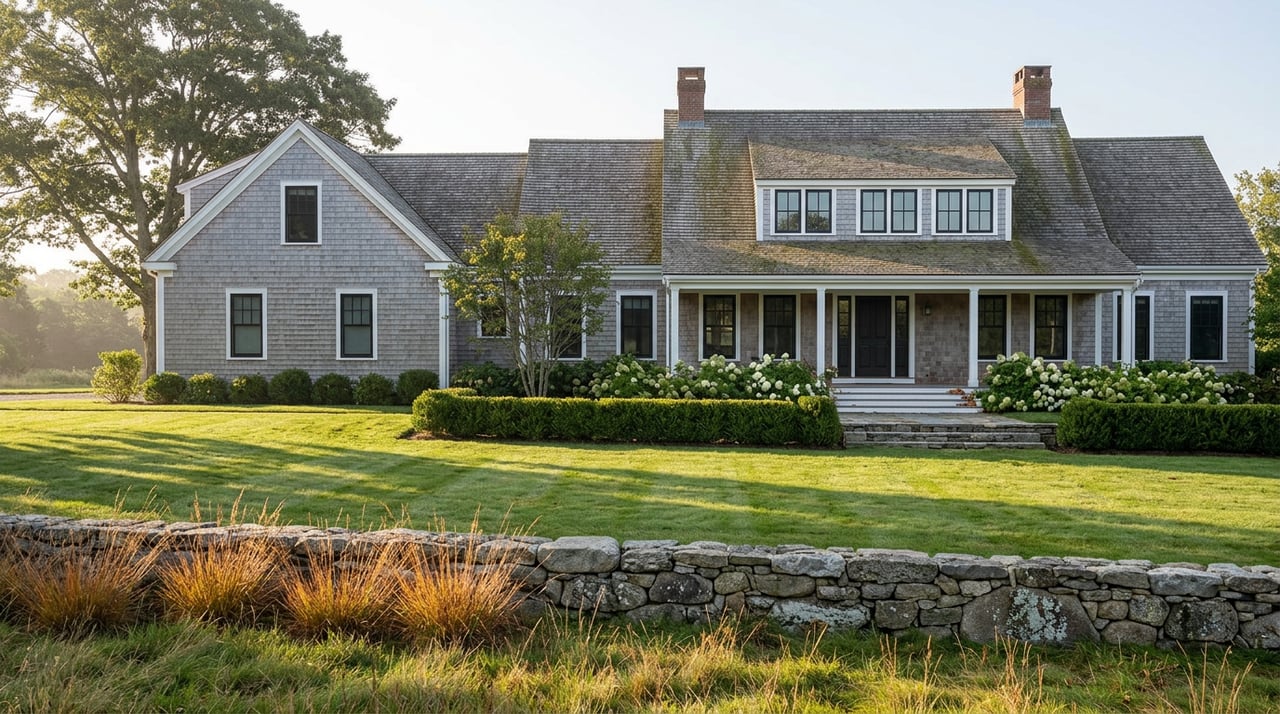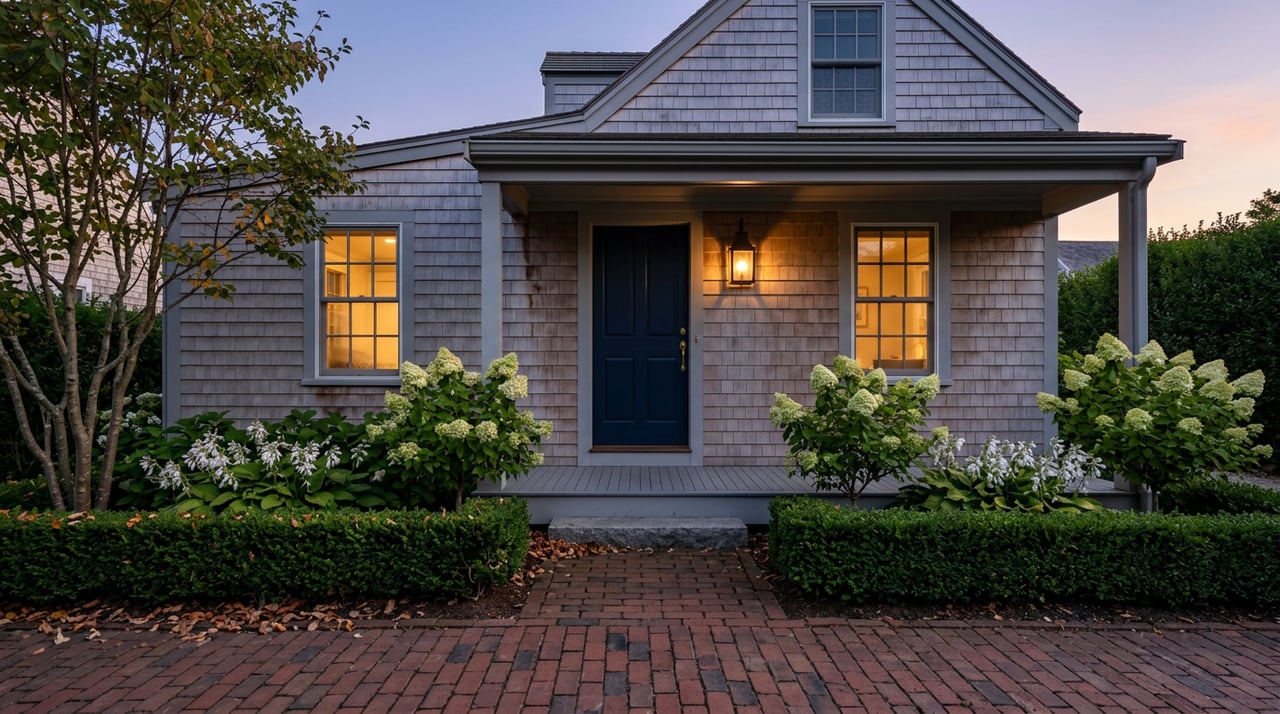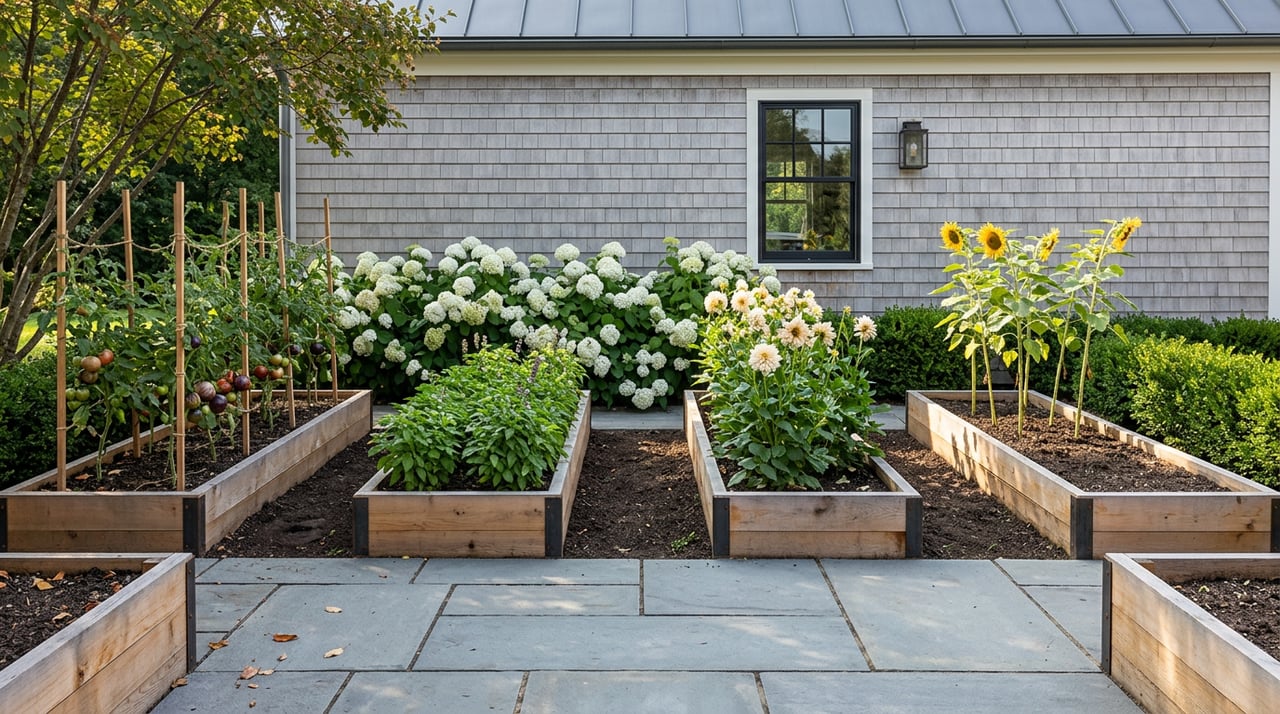
Sagaponack does not have a downtown. It has a school, a general store, a scattering of galleries and design shops, and a grid of lanes that end at the ocean or a pond. What holds the hamlet together is agricultural: hand-painted crates of tomatoes on Sagg Main, cut zinnias in a mason jar on Parsonage Lane, an honor box on a cedar shelf. If you already live here, you know that a Sagaponack weekend is not planned around restaurants. It is planned around stands.
That is the argument of this post, and it is a specific one. The farm stand in Sagaponack is not a summer amenity layered onto village life. It is the village. The rhythm of a Friday-through-Sunday here follows the picking schedule and the honor-box hours of a dozen or so farms, and the addresses that matter most this month are agricultural addresses.
The Village Without a Village
Sagaponack is small enough that goop's May 2026 guide put the frame plainly: the area is delightfully low-key, with no real town to speak of, just a scattering of shops sprinkled along the back roads, and Wyeth chief among them for design. That absence is the point. In East Hampton or Sag Harbor, the weekend concentrates on Main Street. Here it disperses.
The stands take on the civic role a village center would play elsewhere. They are where you run into your neighbor on a Saturday morning, where you learn which fields came in this week, where the summer's produce gossip gets exchanged. The abundance of farm stands offers some of the best produce and prepared foods on the East End, and unlike a restaurant reservation, they scale with a household of any size at any hour.
A Weekend, Mapped by Lane
If you were to draw the choreography of an August Saturday in Sagaponack, it would look less like a schedule and more like a route.
Friday, late afternoon. Provisioning for the weekend. Loaves and Fishes for the prepared side of dinner, then a farm stand for whatever is going alongside it. goop's guide notes the shop's near-mythic reputation for high-quality ingredients turned into the simplest, most delicious versions of everything from baked goods and breads to salads, soups, pastas, meats, and fish, plus the brownie pudding that tastes like warm brownie batter. The Sagaponack General Store is the other magnet, and by weekend afternoons it is so busy you almost have to avoid the area entirely.
Saturday, morning. The stands. This is the hour to hit Pike Farms on Sagg Main before the corn goes. Their own list is unusually long for a single farm: arugula, basil, beans, beets, blackberries, broccoli, brussels sprouts, carrots, cauliflower, corn, cucumbers, cut flowers, eggplant, gourds, herbs, hot peppers, kale, leeks, lettuce, muskmelons, peppers, pumpkins, raspberries, spinach, snap peas, strawberries, summer squash, sunflowers, tomatoes, watermelon, winter squash, and zucchini, alongside Blue Duck breads and pies, Copia granola, Miss Amy's Jams, Tate's Cookies, and now their own honey.
Saturday, midday. Flowers and eggs on Parsonage Lane. Crowley's is generational and specific: a chef's guide published in early 2026 described the operation as a family with roots in the Hamptons for generations, growing everything on their plot on Parsonage Lane and keeping an eye on honey and eggs gathered less than 100 yards away, plus pies sourced from local bakeries.
Saturday, evening. Either a home dinner cooked from the day's haul, or Townline BBQ at 3593 Montauk Highway. Townline is the roadside Texas-style barbecue with smoked brisket sandwiches, giant pretzels, corn on the cob, beer on tap, and pool tables, and this summer they've added Mexican Mondays to the rotation. That last detail is the one worth catching. A Monday reason to return in a hamlet whose social calendar is otherwise weekend-shaped.
Sunday. Madoo Conservancy on Sagg Main and a stop at Wölffer Estate Vineyard before the drive back. Madoo is a horticulturally diverse public garden with historic structures established in 1967 by the artist, gardener, and writer Robert Dash. Wölffer began as a simple potato farm and evolved into an award-winning estate winery on the South Fork, an origin story that mirrors the hamlet's own.
The Tomato Test
If you want a way to tell the stands apart, use tomatoes. Every stand sells them in August. What differs is the philosophy behind the crate.
Pike's are workhorse. Lisa and Bill's, in neighboring Wainscott but part of the same weekly circuit, sets the beefsteak standard: practically everyone working there is family or close to Cici and Andy, the corn is excellent, but the tomatoes are the stand out, specifically the large beefsteak red and yellow, and often the local tomatoes sold at other markets around the East End are coming from here.
Marilee's plays the opposite game. Marilee has the largest variety of tomatoes, striped, purple, green, all crazy shapes and sizes, and the heirloom options are a chef's dream. And Stone's Throw Farm, a 25-plus acre farm in Sagaponack founded by the Goldman family and run by chef, cookbook author, and passionate grower Katja Goldman, using organic standards, treats the tomato as a recipe input rather than a commodity, publishing a weekly chef-crafted newsletter with seasonal recipes and CSA updates.
Three stands, three answers to the same crop:
- Volume and consistency, for the household cooking through the week.
- Variety and shape, for the table that photographs.
- Method and menu, for the cook who wants the farm to plan dinner.
Once you know which type of tomato buyer you are, your Saturday morning route sorts itself.
The Non-Stand Anchors
A few institutions are not stands but function like them, in the sense that they are how the village meets itself.
Sagaponack Farm Distillery sits inside the same agricultural lineage. Its own description is that it creates spirits just down the road from the fields it has been farming for six generations. That is not a marketing line about terroir. It is a literal statement about six generations of the same soil. Wölffer's potato-farm-to-winery arc is the other version of the same story.
Then there is Wyeth, the design shop on Montauk Highway, which serves as a Saturday detour for a certain kind of resident. goop's guide singled it out as a design lover's paradise, and it operates on farm-stand logic in its own way: the inventory changes with what has come in, and there is no substitute for showing up in person.
Madoo, the Sagaponack Farm Distillery, and Wyeth form a Sunday triangle for the residents who have already done their Saturday stand loop and want the day to slow down. The village does not offer a fourth option, and it does not need to.
What Changes After Labor Day
The most useful thing to know about the Sagaponack weekend is what happens to it in September. The stands do not close on Labor Day. Pike's stays open into the fall for pumpkins, gourds, and winter squash. Stone's Throw's newsletter continues. Townline holds its hours. Wölffer's tasting room quiets but does not empty.
The reason the shoulder season matters here is that the crowd thins while the harvest is still peaking. Tomatoes are best in September. Corn is still good. The Sagaponack General Store stops being a scrum on weekends. If your weekend routine has been shaped by the summer choreography above, the same route in mid-September is the same route without the wait.
That is the quiet dividend of living in a hamlet organized around fields rather than storefronts. The rhythm belongs to the growing season, not the tourist calendar, and the growing season is longer than most people who only visit here realize.
A Note for the Weekend
The Sagaponack that residents recognize is legible in its stands and gardens rather than its restaurants. That is why the addresses on Sagg Main and Parsonage Lane hold their value in a way that has little to do with square footage. Buyers who understand the hamlet buy into that rhythm, not around it.
If you own on Daniel's Lane, Hedges Lane, or Sagg Main and are thinking about how your property presents against the village's own aesthetic, or if you are curious how the current Sagaponack market reads at your address, Work With Deborah. The best Sagaponack sales are written in the same quiet grammar as its farm stands: specific, seasonal, and deeply local. That is how Deborah Srb works.